
5 Reasons to Use Drones on your Acres

5 Reasons to Use Drones on Your Acres When it’s time to spray, how many times is it either too muddy, or you can’t get a plane scheduled? Ever had trouble getting cover crops seeded on time? Forget all that frustration. Things are looking up, thanks to today’s high-tech drones. […]
Put Biologicals to the Test

Put Biologicals to the Test, Cut Fertilizer Bill with BeCrop There’s a lot of buzz today about biologicals to boost crop yields, but can they really deliver on their promises? You don’t have to guess anymore, thanks to an advanced soil test that uses genomics to give you answers—and potentially slash your fertilizer […]
Is it time for a new vision for agriculture?

Is It Time for a New Vision for Agriculture? As 2023 gets underway, there’s a lot for farmers to manage, including high energy prices, soaring fertilizer costs, weather challenges and a potentially prolonged period of high interest rates. If it feels like the time to prepare for an uncertain future, that’s right. […]
Want to Grow Better Beans?

If crops were pro football players, corn would be the all-pro quarterback, while soybeans would be the benchwarmers. Admit it—corn often receives all the glory, but a lot of farmers tend to treat soybeans as an afterthought. It doesn’t have to be that way, especially if you want to grow better beans. Here are 5 things you need to know, from tillage to seed coatings. (Hint—if your seed coating doesn’t contain the beneficial fungus Beauveria bassiana, you’re missing out on a natural way to help protect your soybeans from insect pests and disease pathogens.) Click here to get the full story.
Think like a Corn Plant

While it’s tempting to think you’re in control in production agriculture, a real key to success for corn growers is to think like a corn plant. When you pay attention to 5 key controllables, you can stay 7 to 10 days ahead of your crop’s needs–which helps boost profit potential. Click here to see how well you measure up on these 5 factors that help you farm smarter and take more sustainable approach to agriculture.
Want to Cut Your Fertilizer Bill?

As crop input prices soar, what if you could reduce your fertilizer bill, simply based on the soil test you use? It’s possible with the Haney test. The Haney test, which was developed by a farmer-turned-PhD-scientist, measures major nutrients, plus it evaluates various soil health indicators, such as soil respiration, to analyze soil biological activity. Depending on the results of a Haney test, you can potentially lower your nitrogen (N) application rate. If a small investment in a Haney test can save you hundreds of dollars in fertilizer, would that be worth it to you? Click here for our recent interview with Lance Gunderson, president and owner of Regen Ag Lab, LLC in Pleasanton, Nebraska, who answers common questions about the Haney test and shows how to put it to work on your farm.
Confused About Carbon?
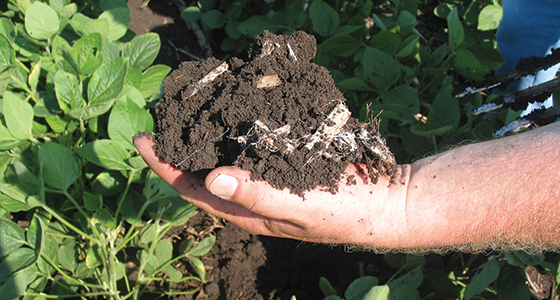
Pop quiz—what’s the most limiting nutrient in crop production? If you guessed carbon, you’re right. There’s a lot of talk today about reducing and removing carbon to protect the environment. But what about managing carbon effectively on your farm to get more from every acre, animal and gallon of manure? There are 5 things every farmer must understand about carbon to produce healthier crops, provide more nutritious feed for livestock and supply more nutrient-dense food for people. Knowledge by itself isn’t enough, though. Click here to learn about the 5 things and a 3-phase Recipe for Success for carbon management to build healthier soils, cut your fertilizer bill, and boost your crops’ resilience and yield potential, no matter what Mother Nature brings.
Fewer Chemicals, Better Biology, Healthier Soil

Fewer Chemicals, Better Biology, Healthier Soil Iowa Crop, Cattle Farm Benefits from the “Recipe for Success” In farming, one key decision can set a chain of events in motion. This domino effect worked in a good way when Bob Henderson’s sons attended the Iowa Power Farming Show in Des Moines a few years ago and […]
Boost Your Odds of Success with the Recipe for Success

When Nebraska farmer Brian Hoffman built a slatted, monoslope beef barn in 2017, he wanted to prevent manure from building up. He searched online and found a biology-based solution from ProfitProAG that worked well for him. This made Brian wonder–if putting biology back into the system works this well for manure management, what could it do for crop production—especially if you want to reduce synthetic chemical inputs? Now Brian uses a step-by-step system that he believes might just be the future of agriculture. Click here for the full story.
In-Season “Stay Green”

Reeling from fertilizer sticker shock? In some areas, fertilizer prices have skyrocketed more than 300%. Delivery times are anyone’s best guess. What’s your next move? Plant less corn next spring? Cut back on fertilizer to save money? Critical mistakes are easy to make at times like this. Here are 3 things you should never do if you want to control your fertilizer costs in 2022.
