
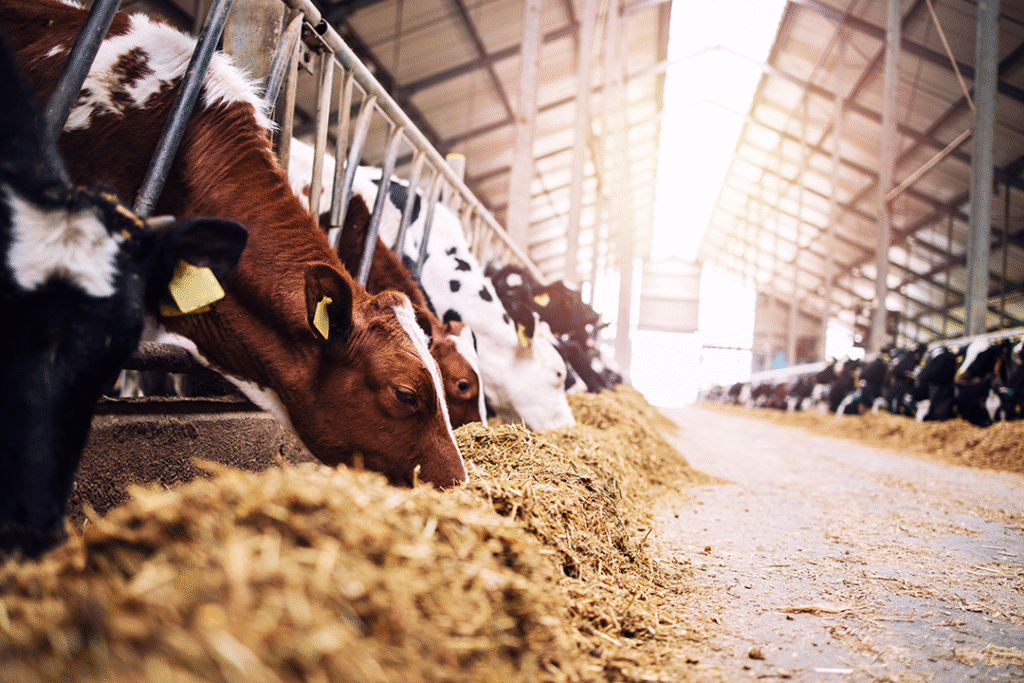
Dairy producers spend a great deal of time focusing on yield, but when it comes to profitability, the question isn’t simply how many tons come off a field.
The better question is: How much nutrition came off that field?
A recent comparison of EnSoil Algae-treated forages versus untreated controls suggests the answer may be considerably more.
Across both corn silage and grass-alfalfa forage, the treated crops consistently delivered improvements in digestibility, protein quality, and energy availability. More importantly, those improvements translated into higher projected milk production values and higher forage quality scores.
Better Fiber Digestion Means More Available Nutrition
One of the biggest limitations in forage is not how much fiber it contains, but how much of that fiber a cow can actually digest.
Nutritionists measure fiber digestibility using a test called NDFD12. Think of it as a way to estimate how much of the fiber portion of the forage is available to the rumen during the first 12 hours after a cow eats it. The higher the number, the more quickly cows and rumen microbes can access the energy locked inside the plant fiber.
In the corn silage trial, treated forage achieved an average NDFD12 of 31.3% compared to 26.3% in the untreated forage, an improvement of nearly 19%.
The grass and alfalfa trial told a similar story, with NDFD12 increasing from 38.2% to 40.1%.
That may sound like a small change, but even a few percentage points increase in fiber digestibility can have a meaningful impact on the amount of energy cows obtain from forage. More digestible fiber helps rumen microbes break down feed more efficiently, allowing cows to capture more nutrition from every mouthful.
More Milk-Producing Potential Per Ton
Ultimately, forage quality matters because it affects what cows can do with it.
In the corn silage study, the treated silage generated an average Milk per Ton value of 3,744 pounds, compared to 3,480 pounds in the control, an increase of 264 pounds of milk potential per ton of forage.
The grass and alfalfa trial produced similar results. Treated forage increased projected milk production from 2,558 pounds to 2,743 pounds per ton, a gain of 185 pounds.
While actual production depends on herd management, genetics, and ration formulation, these calculations demonstrate the increased nutritional value available to the animal.
Higher Quality Protein
Protein remains one of the most valuable nutrients on a dairy farm.
The grass and alfalfa trial showed crude protein increasing from 14.29% to 16.82%, representing nearly an 18% increase over the control.
Even more interesting was the increase in total amino acids from 11.09% to 12.30%.
Since amino acids are the building blocks of protein, this indicates the crop wasn’t simply accumulating more nitrogen. It was producing more nutritionally valuable protein that could contribute to animal performance.
The corn silage samples also showed improvements in total amino acids, increasing from 6.83% to 7.17%.
Improved Feed Quality Scores
Nutritionists often use Relative Feed Value (RFV) and Relative Forage Quality (RFQ) as quick indicators of forage feeding value.
RFV estimates forage quality based primarily on fiber levels and predicted intake. In simple terms, it helps answer the question,”How much of this forage will a cow likely eat?”
RFQ goes a step further by incorporating fiber digestibility. Rather than looking only at how much forage a cow can consume, RFQ also considers how much nutrition she can extract from it. Because of this, many nutritionists view RFQ as a more accurate measure of how forage will perform in a dairy ration.
Think of it this way: RFV estimates intake potential, while RFQ estimates intake potential plus digestible nutrition.
In the grass-alfalfa trial:
- RFV increased from 120 to 135
- RFQ increased from 126 to 146
An RFQ improvement of nearly 16% is particularly noteworthy because it reflects gains in both intake potential and digestibility. In practical terms, the treated forage was not only easier for cows to consume, but it also provided more usable nutrition once consumed.
These results align with the improvements seen in fiber digestibility, energy values, and milk-per-ton calculations throughout the study, reinforcing the idea that the nutritional benefits of the treated forage extended well beyond a single measurement.
More Energy Delivered to the Cow
Energy is one of the most valuable components of any dairy ration because it fuels milk production, reproduction, growth, and overall animal performance.
One common way nutritionists evaluate forage energy is through TDN (Total Digestible Nutrients). Think of TDN as an overall estimate of how much usable energy a forage contains. The higher the TDN value, the more energy a cow can potentially extract from the feed.
The TDN-OARDC calculation takes this concept a step further. Developed using research from the Ohio Agricultural Research and Development Center (OARDC), it incorporates forage digestibility measurements to provide a more accurate estimate of the energy that is actually available to the animal. Instead of simply measuring what nutrients are present in the forage, it considers how much of those nutrients can be digested and utilized.
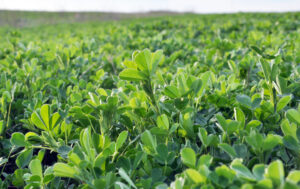
In the grass-alfalfa trial, treated forage increased Total Digestible Nutrients (TDN) from 60.1% to 62.4%.
In the corn silage trial, the treated samples achieved an average TDN-OARDC value of 74.8 compared to 72.7 for the untreated silage.
While a 2-point increase may not sound dramatic, improvements in forage energy can have a significant impact when multiplied across hundreds of cows consuming forage every day. More available energy means more of the harvested crop can be converted into milk production rather than passing through the animal unused.
Looking Beyond Yield
The most interesting aspect of these trials is that improvements weren’t limited to a single nutrient.
Digestibility improved. Protein improved. Amino acids increased. Energy values rose. Milk-per-ton calculations increased. Forage quality scores improved.
Taken together, the data suggests EnSoil Algae may help producers grow forage that does more than fill a bunker or silo.
It helps produce forage that delivers more value when it reaches the dairy cow.
Because at the end of the day, the most profitable ton of forage isn’t always the one with the highest yield. It’s the one that converts the greatest amount of nutrition into milk.
