
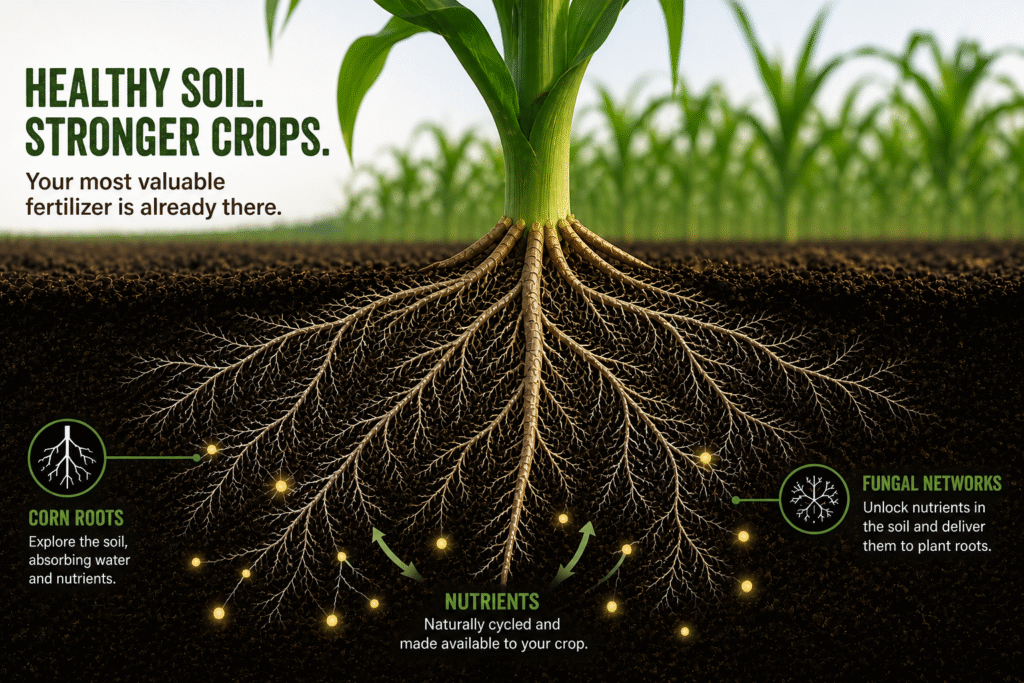
 When your crop is young, what’s feeding those seedlings? It’s not fertilizer. In fact, your soil might be starving.
“It’s the fungal-to-bacterial ratio that helps young plants,” said Ray Archuleta (“The Soil Guy”), a featured speaker at ProfitProAG’s 2026 Winter Conference earlier this year. “You want more beneficial fungi in your soil, and you get more fungi through cover crops. Plants fix dirt.”
Beneficial fungi and other helpful soil microbes are a game-changer for farmers, enhancing nutrient cycling, soil structure, and crop resilience. Without this, you could be in trouble, even if you’re adding fertilizer.
“The issue is that the soil is starving,” said Archuleta, a former Natural Resources Conservation Service (NRCS) employee who has embraced regenerative ag for more than 20 years.
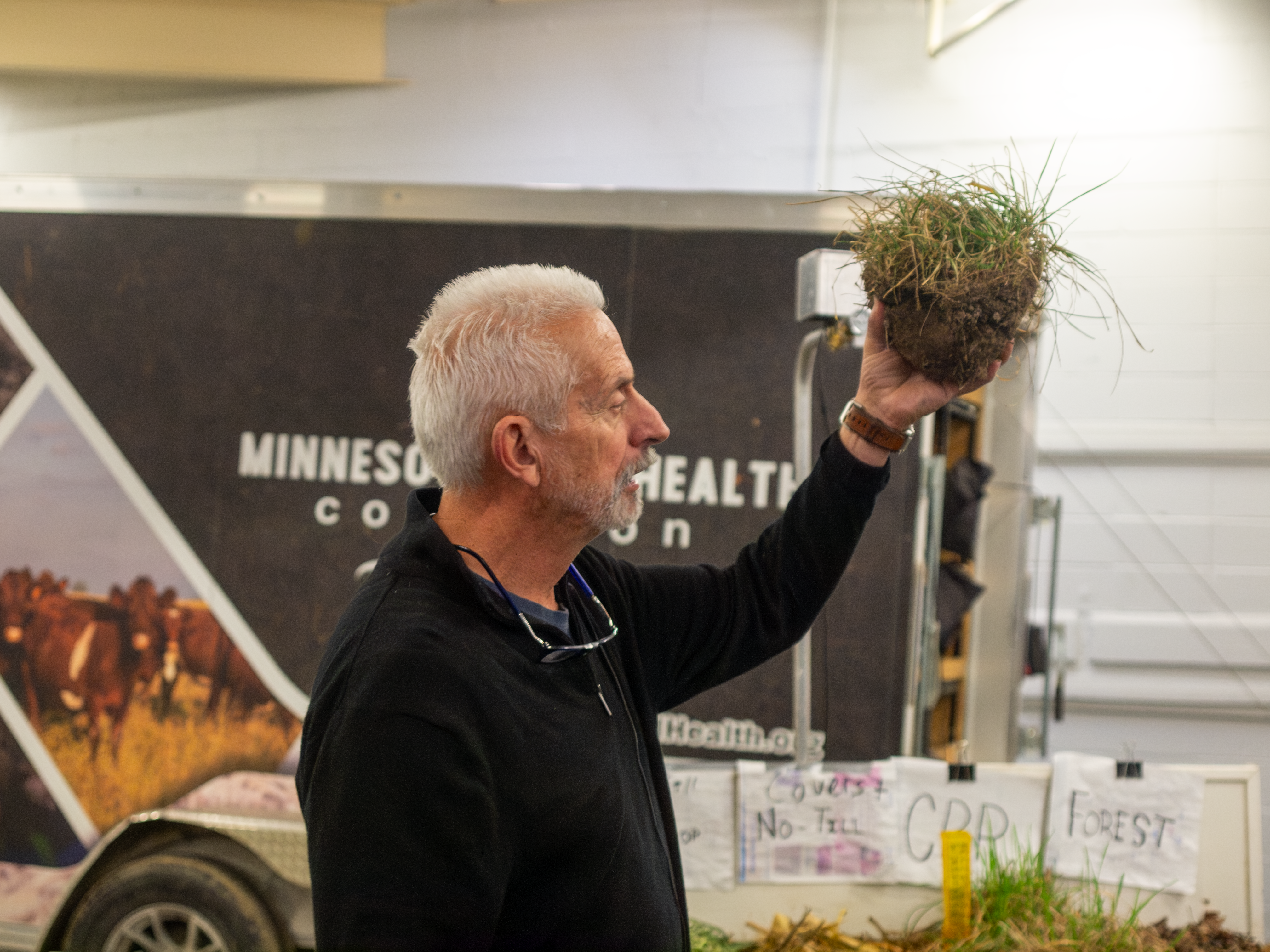 Make the most of nutrient cycling.
With the threat of rising fertilizer prices, it’s essential to maximize the free fertilizer (nutrients that are “locked” in the soil and aren’t readily available for plant uptake) already in your fields. To make this happen, it’s vital to implement some key management practices, including:
- Reduced tillage.
- Seeding cover crops.
- Building organic matter.
Accessing the free fertilizer in your soil is rooted in biology. “If you’re trying to help plants grow, you’re in a biological system and need to understand how it works,” said Jim Ladlie, founder and CEO of ProfitProAG.
This includes nutrient cycling—a natural process where beneficial microorganisms harvest nutrients (including phosphorus, potassium, calcium, iron, boron, and more) from soil organic matter, as well as rocks, silt, and clay in the soil.
Plants are not capable of directly accessing the nutrients in these materials. Bacteria and fungi, however, produce enzymes that break down these structures, releasing the nutrients they contain. When these natural, biological processes work well in a healthy soil, plant roots can easily absorb this nutrient-dense, liquid food source.
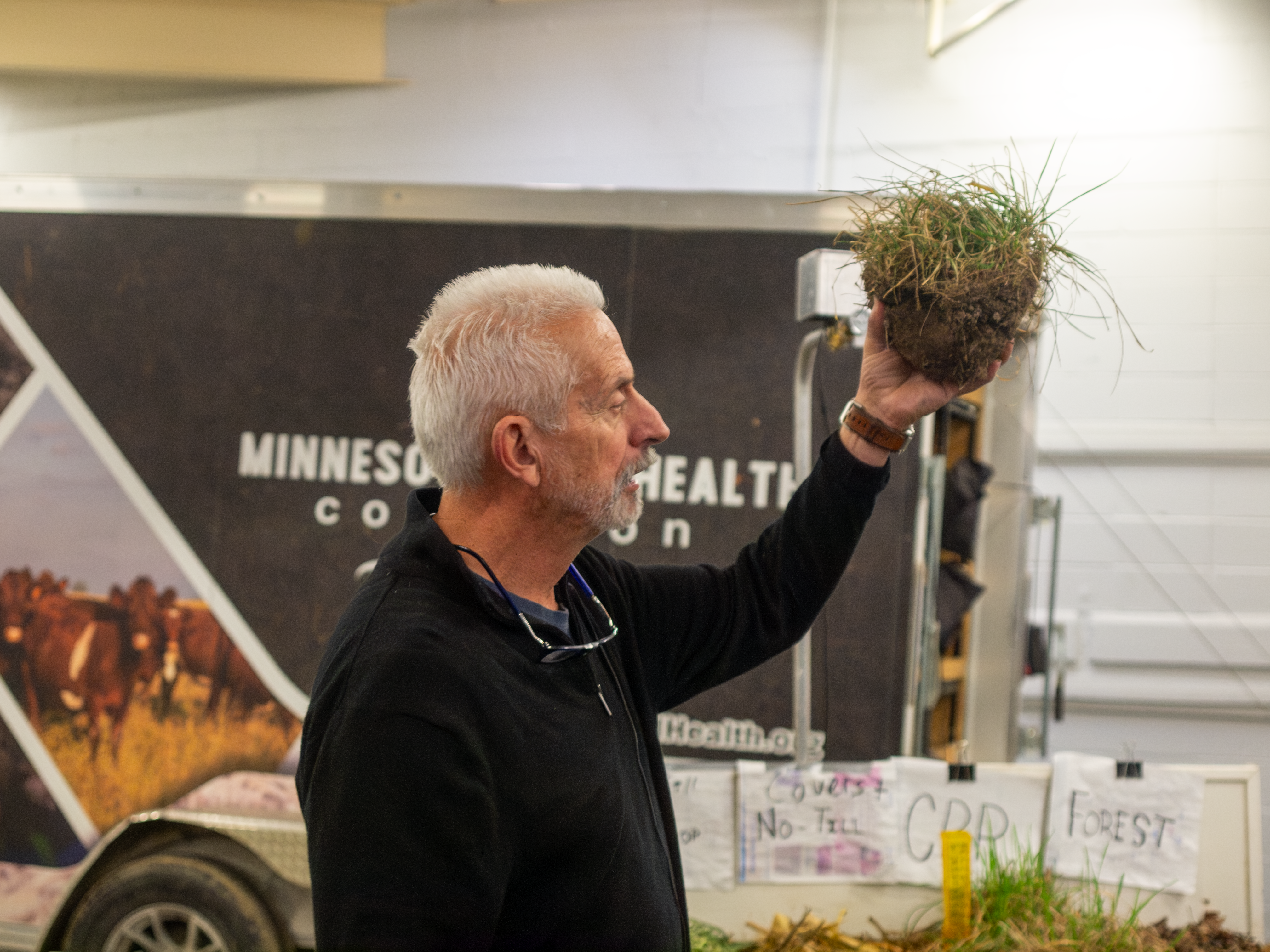 Reducing tillage, seeding cover crops, and building organic matter helps foster a more balanced bacterial-to-fungal ratio, which:
- Unlocks nutrient cycling. Fungi, particularly mycorrhizal fungi, form extensive networks that act as an “underground highway.” These pathways access and deliver nutrients such as phosphorus, nitrogen, and micronutrients directly to plant roots. Unlike bacteria, which primarily decompose simple organic matter for rapid nutrient release, fungi excel at breaking down complex materials like lignin, unlocking nutrient pools that would otherwise remain inaccessible.
- Improves soil resilience. A fungal-rich soil sequesters carbon, promoting long-term fertility and reducing the need for synthetic fertilizers. However, an overly bacterial-dominated soil—often caused by excessive tillage or chemical inputs—disrupts this balance. When this occurs, fast-growing bacteria outcompete fungi for carbon and space, limiting fungal networks and reducing nutrient availability. Over time, this can degrade soil structure, increase compaction, and elevate input costs, due to diminished natural fertility.
Test your soil
You can check microbial biomass in your soil with tools like the PLFA test. A PLFA (phospholipid fatty acid) analysis provides a real-time snapshot of the soil microbial community. You can see how many bacteria, fungi, and protozoa there are, and in what balance.
The PLFA (which can be an important part of a regenerative ag program) pays special attention to:
- Arbuscular mycorrhizal fungi, which are critical for phosphorus uptake.
- Saprophytic fungi, which help break down residue in the field.
- Protozoa. These tiny predators release nutrients like nitrogen as they graze on bacteria. Most soils don’t have protozoa in them. Protozoa are the “lions” of the soil, meaning they’re at the top of the food chain. They are responsible for most of the nutrient supply. If there are no protozoa in your soil, it means you’re tilling the soil too much.
If a soil test doesn’t account for the soil microbial activity that makes nutrients available to plants, you don’t get a clear picture of your soil’s fertility needs. That often leads to applying more fertilizer than you need.
Want more information about pulling PLFA samples, where to send them for testing, and how to interpret the results? Contact Dennis Klockenga, a Certified Crop Adviser (CCA) and crop management consultant with ProfitProAG, at 320-333-1608, or dklockenga@profitproag.com.
Control the Controllables
While there’s a lot you can’t control in farming, like the weather, commodity prices, or fertilizer prices, there are a lot of things you can control—like reducing tillage, planting cover crops, and using data from the Haney test to guide your management decisions.
“You have a lot of responsibility as a farmer and a steward of the land,” Archuleta said. “But if you do even a fraction of these things, you’ll be bushels ahead.”
If you’re ready to dig deeper into PLFA sampling, Haney test data, or building a regenerative nutrient‑cycling plan, our team can help you get started. Contact ProfitProAG at (507) 373‑2550 or info@profitproag.com.
